
Etsy Shop Not Getting Sales? How to Find and Fix the Cause
Etsy shop not getting sales? Use your Stats to find whether it's a traffic, conversion or product problem, then follow our 60-minute audit to fix it.
Etsy marketplace consultancy for businesses in the USA and worldwide.
Etsy Ads explained for beginners: how pay-per-click works, which listings to advertise, how to set a budget and how to calculate your break-even ROAS.
Part of: Etsy Shop Not Getting Sales? How to Find and Fix the Cause
In short: Etsy Ads promote your listings in Etsy search and other places on Etsy, and you pay when a shopper clicks. You set a daily budget, Etsy never charges more than that per day, and Etsy decides where the ads appear. Ads work best on listings that already sell without them. Start with a small budget on a handful of proven listings, work out your break-even return on ad spend, and keep only the ads that earn more than they cost.
Last updated: 17 November 2026. Fee and budget details checked against Etsy's Fees & Payments Policy and Payment Processing Fees on Etsy Help.
Etsy Ads are the first paid tool most sellers try, and often the first one they give up on. A few dollars disappear, no orders arrive, and the switch goes off. The problem is rarely the ad system. It's usually the listings behind the ads and the lack of a clear number that says whether an ad is worth keeping. If you want to test Etsy Ads properly, with a budget you can afford to lose and a simple way to judge the results, this guide is for you.
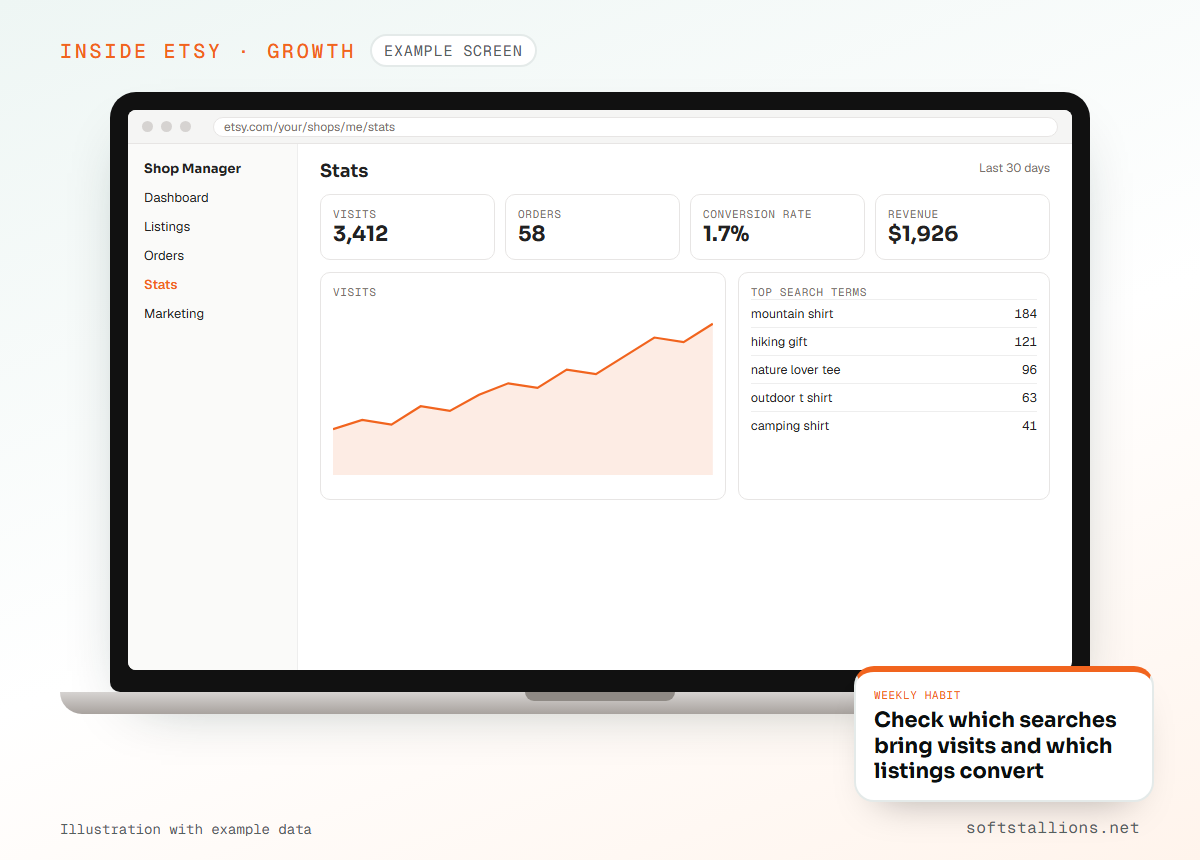
Etsy Ads is Etsy's own advertising programme. When you advertise a listing, Etsy can show it in promoted spots in search results and on other pages across Etsy, marked as an ad. You pay for clicks, not for views. If nobody clicks, you pay nothing for that day.
Three rules shape everything else:
That last point is the one sellers miss. Etsy Ads can bring more shoppers to a listing. They can't make a weak listing convincing.
They are two separate programmes with different costs. Many new sellers only discover Offsite Ads when a fee appears on their bill.
| Etsy Ads | Offsite Ads | |
|---|---|---|
| Where ads appear | On Etsy: search results and other Etsy pages | Outside Etsy, on sites and apps where Etsy buys ads |
| Who pays for the ad | You, per click, up to your daily budget | Etsy pays for the ad; you pay a fee only when it leads to a sale |
| Fee | Cost per click, set by Etsy's bidding | 15% of the order if your shop made under $10,000 in the past 365 days; 12% once you pass $10,000. Capped at $100 per order |
| When the fee applies | Every click on your ad | Orders within 30 days of a shopper clicking an offsite ad |
| Can you opt out? | Yes, turn ads off any time | Only while under $10,000 in yearly sales; after that it is required for the life of the shop |
The rest of this guide is about Etsy Ads, the programme you control. If you're under the $10,000 threshold, decide on Offsite Ads separately: check your margin at a 15% fee and opt out in your settings if the numbers don't work.
Usually not in the first weeks. A brand-new listing has no sales history, no reviews and no proof that shoppers who see it want to buy it. Paying for clicks at that stage mostly tells you what you could have learned for free: whether the listing converts.
Etsy Ads are more likely to pay off when:
They tend to waste money when you advertise every listing at once, when your margin is thin, or when the listing gets plenty of views but no orders without ads. If that last one describes your shop, start with our guide to fixing listings that get views but no sales before you spend anything.
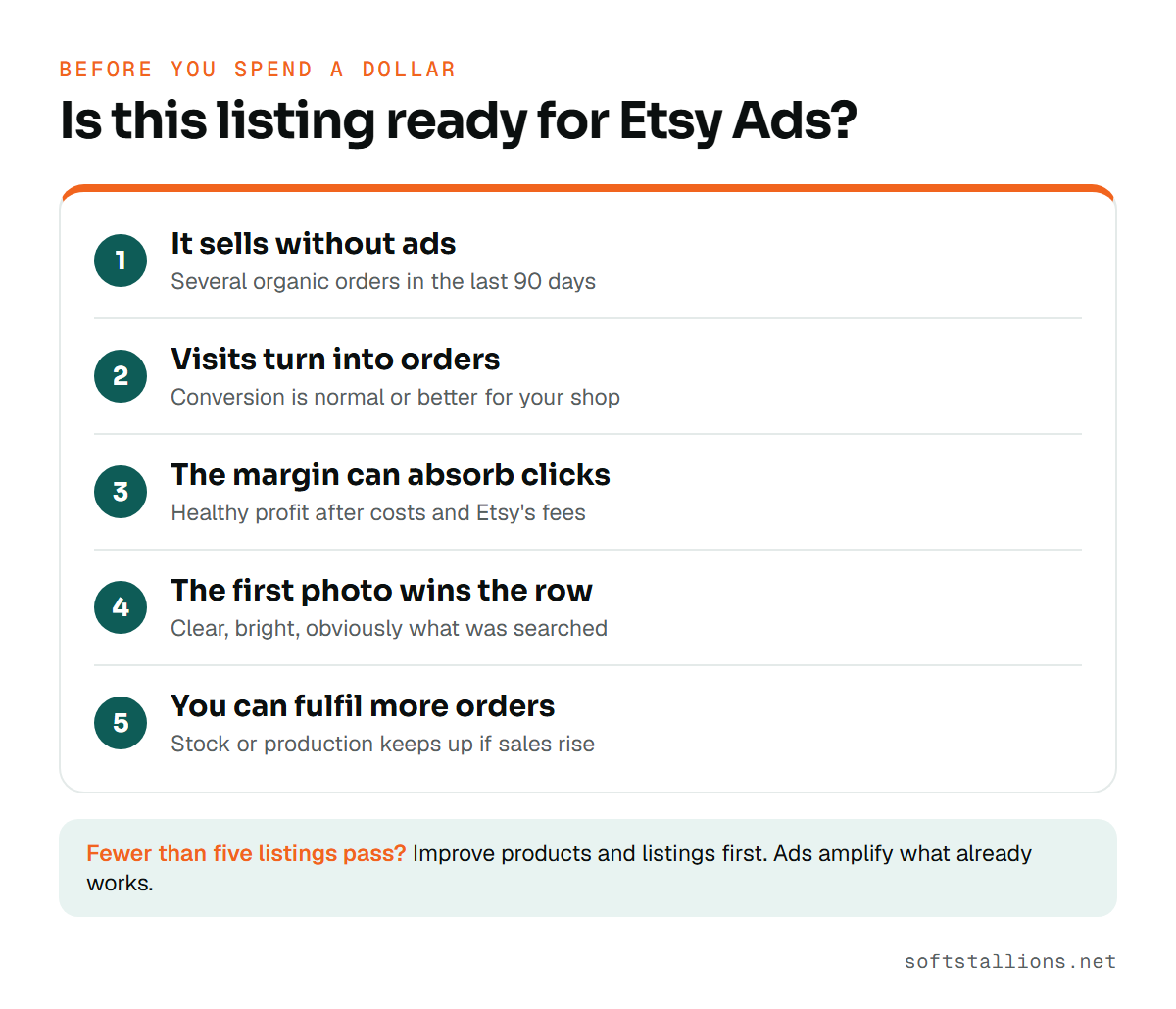
Pick a short list. Open Shop Manager, go to Stats, set the date range to the last 90 days and look at each listing's visits and orders. Advertise only listings that pass all of these checks:
Five to ten listings that pass is a good starting set. If you can't find five, that's useful information. Your next step is better products and listings, not ads.
Start with a daily budget small enough that you won't panic and switch everything off after two days. For many small shops that means a few dollars a day. The aim of the first month is data, not a flood of sales: which listings convert with paid traffic, what a click costs in your category and what return you get.
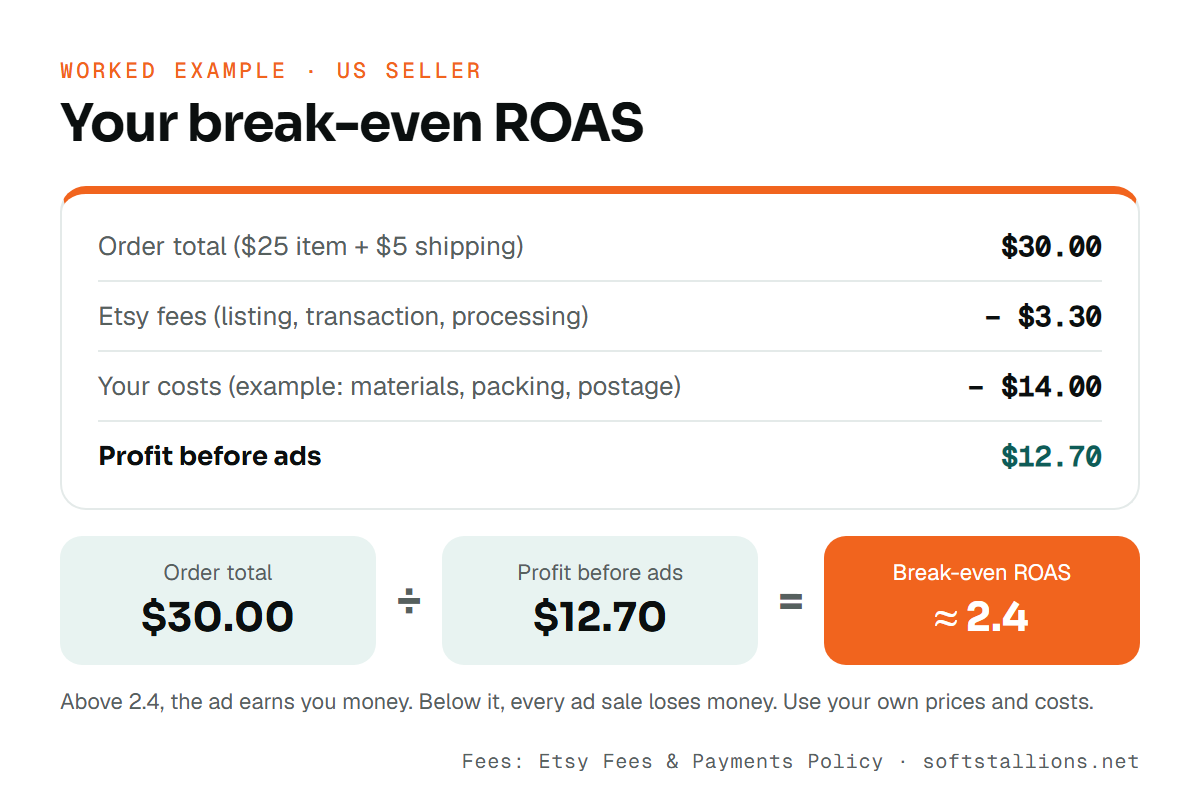
Before you start, work out your break-even ROAS. ROAS (return on ad spend) is the revenue from ad orders divided by what you spent on ads. Break-even is the point where the ad pays for itself and no more.
A ROAS of 2.4 means you break even. Anything above it is profit; anything below loses money on every ad sale. Your own break-even number will differ, because it depends on your price and costs. Shops with high margins can live with a lower ROAS; shops with thin margins need a much higher one. Our guide to Etsy fees shows how each fee is calculated if you sell outside the US.
The advertising dashboard in Shop Manager shows how your ads performed, overall and per listing. These are the numbers that matter:
| Metric | What it tells you | What to do with it |
|---|---|---|
| Views | How often your ad was shown | Low views on a listing usually mean Etsy finds few matching searches; review its title and tags |
| Clicks and click rate | How often shoppers chose your ad | Many views but few clicks points to the first photo or the price shown in search |
| Orders | Sales Etsy attributes to ad clicks | Clicks without orders points to the listing page itself |
| Revenue | The value of those orders | Divide by spend to get ROAS |
| Spend | What you paid for clicks | Compare with revenue per listing, not just in total |
Always look listing by listing. A healthy overall ROAS can hide one strong listing carrying three that lose money.
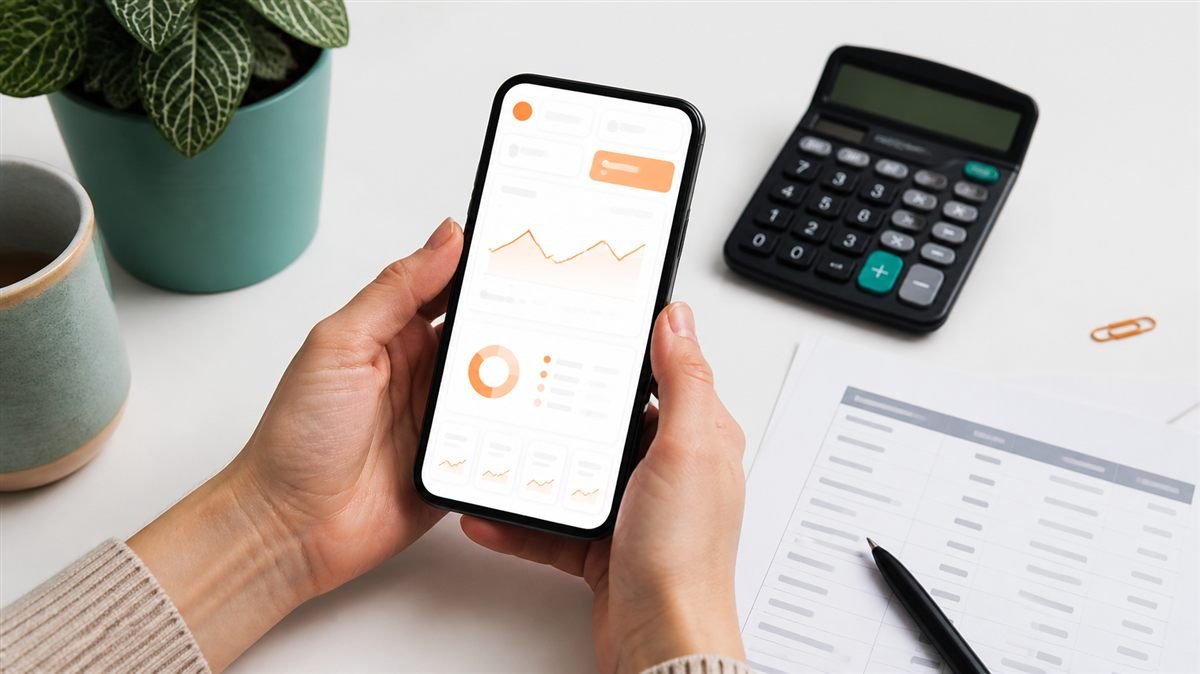
Decide your rules before you start, so you aren't deciding on feelings later. We use rules like these with clients:
When you scale, raise the budget in small steps and watch whether ROAS holds. Doubling a budget overnight makes it hard to tell what changed.
The cheapest improvement is almost always the listing. An ad gets you into a row of thumbnails next to competitors. Your photo decides whether you win the click, and the listing decides whether the click becomes an order.
If you aren't sure where your listings lose shoppers, our Etsy listing optimization service reviews photos, titles, tags and pricing before you put money behind them.

You choose a daily maximum budget above Etsy's minimum, and Etsy never charges more than that per day. Within that budget you pay per click, and the cost of each click depends on Etsy's bidding and competition in your category.
Not in the way Google Ads works. Etsy decides where to show your ads based on your listing content, so clear titles, relevant tags and complete attributes are how you influence which searches you appear in.
One above your own break-even ROAS. Divide your order total by your profit before ads to find it. A product with a low margin needs a much higher ROAS than one with a high margin.
If your shop made under $10,000 in the past 365 days, you can opt out. Check your profit on a typical order after a 15% fee. If it still works, Offsite Ads can bring sales you wouldn't otherwise get.
Plan for about a month on a small budget. That's usually enough to see which listings convert with paid traffic and which should be switched off.
Free consultation · USA & worldwide
We review your listings, margins and ad data, then tell you which listings deserve a budget and which need fixing first. No pressure to spend more than your numbers support.
Or see: Etsy Shop Optimization · Etsy Listing Optimization · Etsy SEO Services · Etsy Consulting
Etsy shop not getting sales? Use your Stats to find whether it's a traffic, conversion or product problem, then follow our 60-minute audit to fix it.
How to promote your Etsy shop outside Etsy: Pinterest, TikTok, Instagram and email, Etsy's Share & Save links, and how to track what brings real sales.
Etsy Black Friday 2026 planning: a timeline from August to January, what to sell, how to price a discount, set up a sale and meet holiday shipping dates.