What to Sell on Etsy in 2026: Product Ideas With Real Demand
What to sell on Etsy in 2026: product ideas that suit Etsy buyers, what the Creativity Standards allow, what to avoid and how to test an idea first.
Etsy marketplace consultancy for businesses in the USA and worldwide.
Etsy niche research step by step: find buyer-led niche ideas, check demand and competition with free tools, spot gaps, score each idea and test a small batch.
Part of: What to Sell on Etsy in 2026: Product Ideas With Real Demand
In short: Etsy niche research means finding a specific group of buyers with a specific need, then proving that they search and buy on Etsy and that you can serve them better than current shops. Brainstorm from buyers, not products. Check demand with Etsy search suggestions, recent reviews and Marketplace Insights, measure competition on the first page of results, look for gaps in reviews and listings, score each idea, then test a small batch before you build the whole shop.
Last updated: 4 November 2026. Rules and tools checked against Etsy's Creativity Standards, How to Use Etsy Stats, Etsy Help's Marketplace Insights guide and Google's Trends data FAQ.
A niche decides almost everything that follows: your designs, your keywords, your photos, your prices and who you talk to outside Etsy. Go too broad and you compete with everyone. Go too small and nobody searches for it. This guide is for new sellers choosing a first niche, and for existing shops that sell a bit of everything and want to focus. You'll get a repeatable method to find a profitable Etsy niche using free tools.
An Etsy niche is the combination of a buyer, a need and a style. "Wall art" is a category. "Watercolor nursery prints for woodland-themed baby rooms" is a niche. It tells you who buys, why they buy and what the product should look like.
A useful way to write it down is a single sentence: [product type] for [buyer] who want [need or occasion] in [style]. If you can't fill in the buyer and the need, you don't have a niche yet. You have a product.
Etsy is a search marketplace. Buyers type what they want and Etsy shows listings that match. A focused niche helps in four ways:
Focus is also easier to run. You can photograph, write and market a coherent range much faster than fifty unrelated items.
Start from people, not products. Write a long list of possible buyers, then think about what each one buys on Etsy. These prompts produce plenty of ideas, and our guide to what to sell on Etsy has more:
Then filter by what you can realistically make. Your skills, tools and business model matter. A designer with no shipping options suits digital products or print on demand. A maker with a kiln suits ceramics. If you haven't chosen a model yet, read our guide to Etsy business models first.
Interest helps you keep going, but don't let it be the only filter. A niche you love still needs buyers who search for it.
Demand research answers one question: do enough people search for and buy this on Etsy right now? Use several signals together, because each one alone can mislead you.
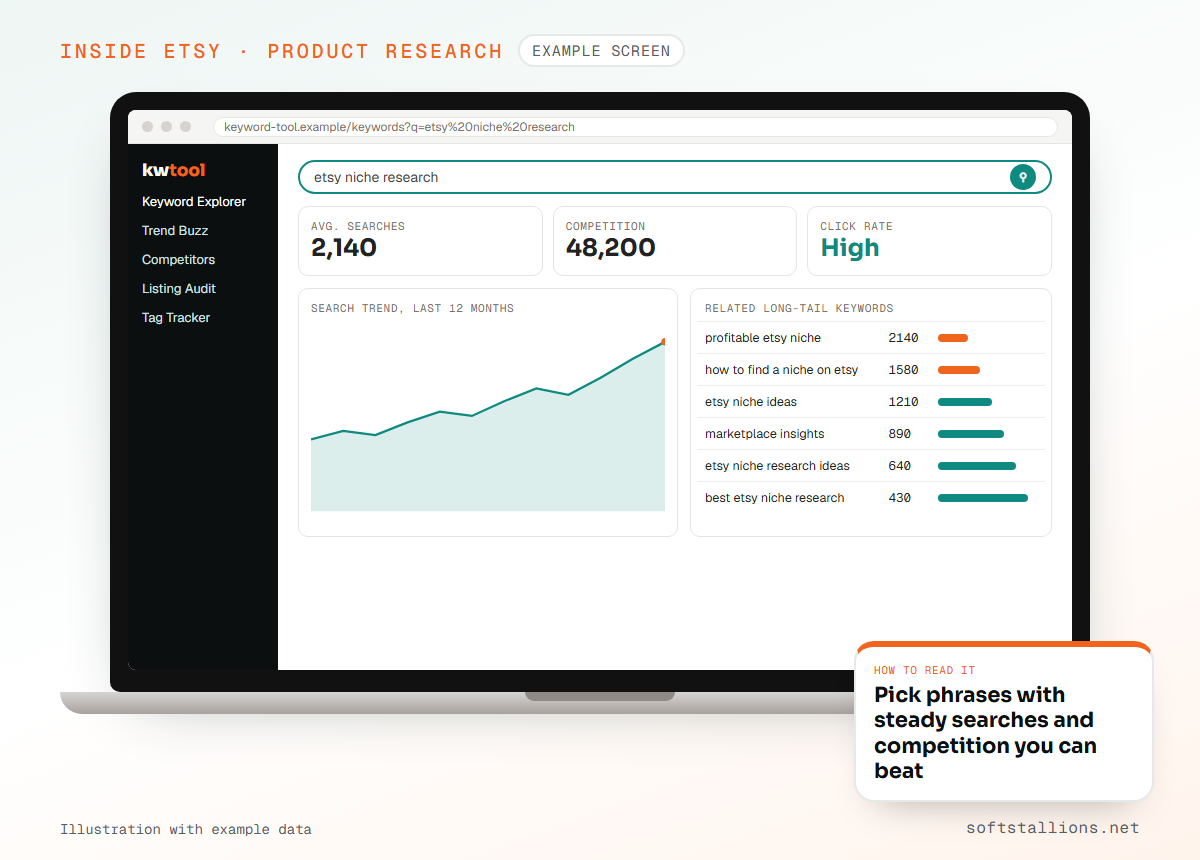
Type the niche into Etsy's search bar and note what Etsy suggests. Add buyer words and occasions to see more. Long, specific suggestions show how shoppers actually phrase their searches.
Open the top listings for your main phrase. Several listings with reviews from the past few weeks mean the product sells now. Old reviews only, or very few, suggest weak or fading demand.
Etsy's Marketplace Insights tool, under Stats in Shop Manager, shows how many searches and listings a keyword had over a recent period, along with related search terms. Free use is limited to a set number of keyword searches each week, and Etsy Plus subscribers get more. It's the closest thing to official Etsy search data you can get, so use it on your shortlisted phrases.
Google Trends shows whether interest in a topic is rising, falling or seasonal. It reflects Google searches, not Etsy, and shows relative interest rather than search counts. Use it to spot timing and long-term decline. Our guide to Google Trends for Etsy explains how to read it.
Competition isn't a reason to avoid a niche. It proves a market exists. What matters is whether a new shop can stand out. On the first page of results for your main phrases, look at:
Marketplace Insights helps here too, because it shows the number of listings alongside the number of searches. Many searches with relatively few listings is the pattern you hope to find. For a deeper method, see our guide on how to study top shops.
A gap is something buyers want that the current listings don't offer well. The best source is other shops' reviews. Read the reviews on top listings in your niche and note:
Then check the listings themselves for missing options such as sizes, colors, formats, languages or personalization fields. A niche with clear, repeated complaints is often a better opportunity than one where every buyer seems happy.

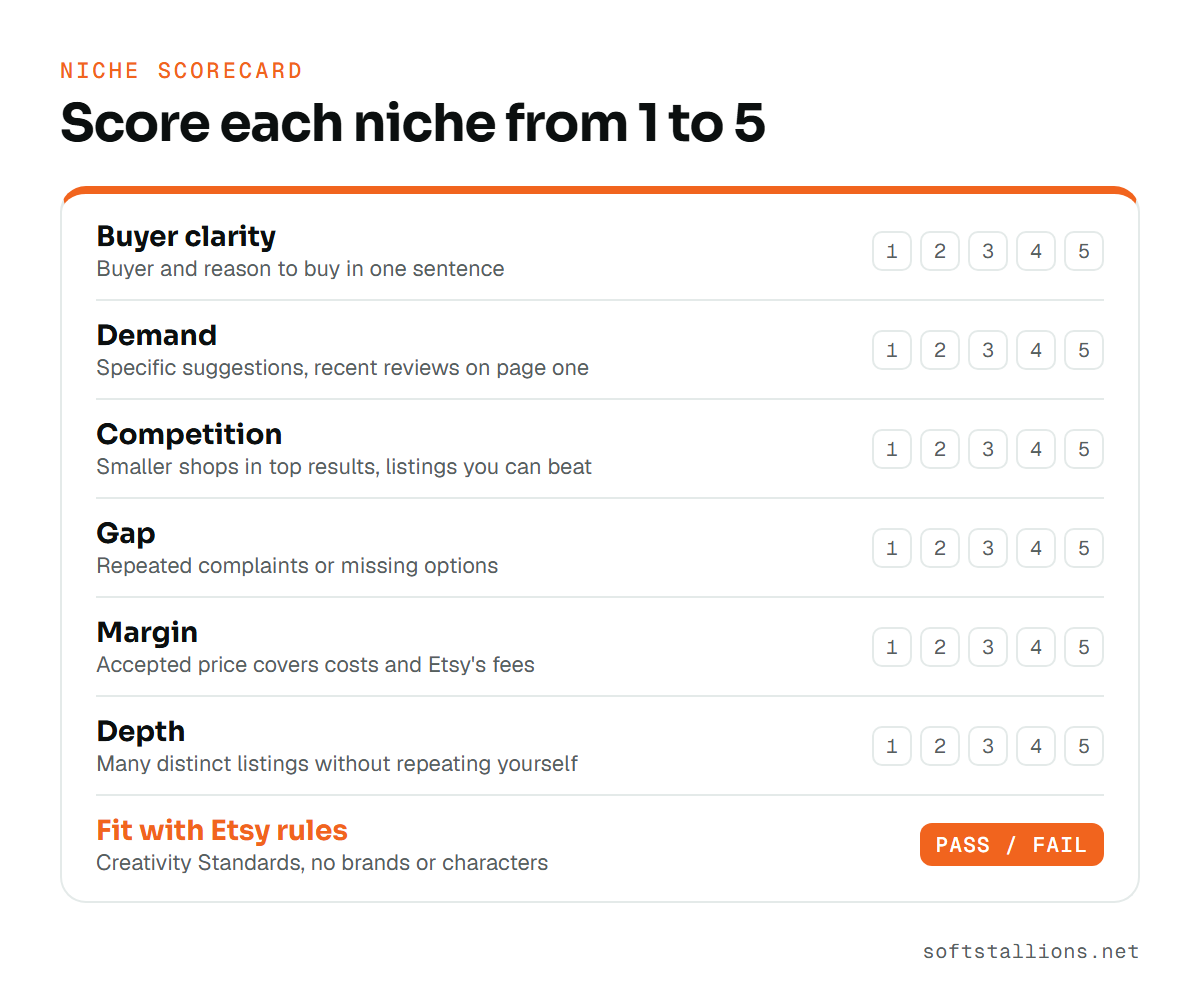
Once you have five to ten candidate niches, score each one from 1 to 5 on the same criteria. Writing the scores down stops you from picking the idea you happen to like most that day.
| Criterion | What a 5 looks like |
|---|---|
| Buyer clarity | You can describe the buyer and their reason to buy in one sentence |
| Demand | Specific search suggestions and recent reviews on several top listings |
| Competition | Top results include smaller shops and listings you can clearly beat |
| Gap | Repeated complaints or missing options you can solve |
| Margin | Buyers already pay a price that covers your costs and Etsy's fees |
| Depth | You can create many distinct listings without repeating yourself |
| Fit with rules | Clearly fits Etsy's Creativity Standards and needs no brands or characters |
Treat "fit with rules" as a pass or fail. A niche built on team logos, film characters or song lyrics fails however high it scores elsewhere, because Etsy removes infringing listings and can end selling privileges for repeat infringement.
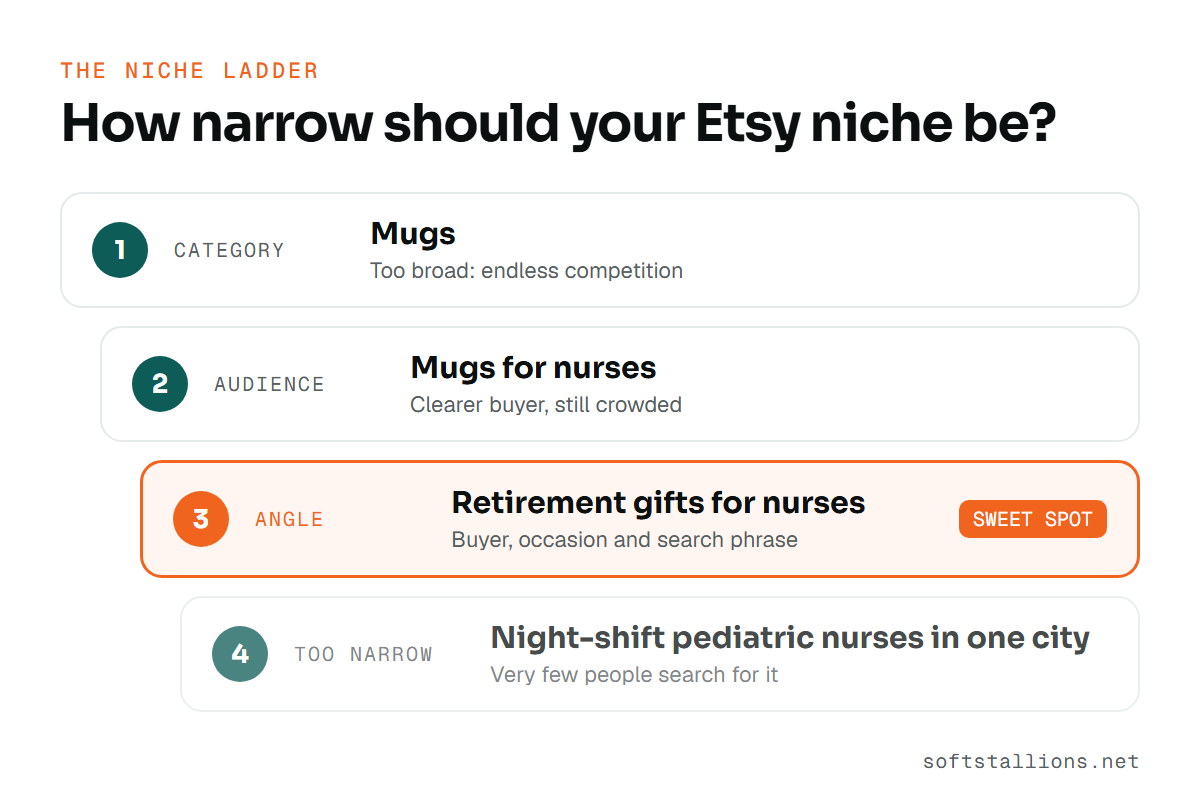
Narrow enough that the buyer is obvious, broad enough that you can build a range. A simple test is to move up and down a "niche ladder":
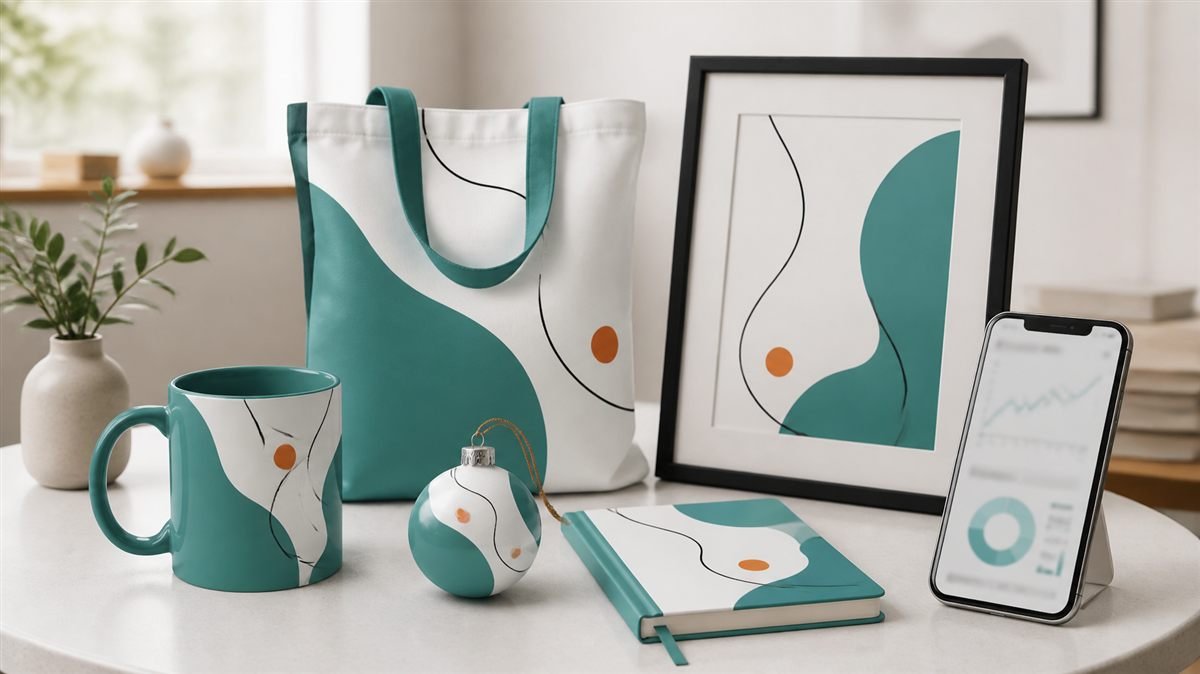
The third rung is usually the sweet spot for a first test. You can then widen into related angles (nurse graduation, nurse appreciation week) or related products (tote bags, ornaments, framed prints) without losing focus.
Research narrows the options, but only real listings tell you what buyers do. Keep the first test small and cheap:
Digital products and print on demand make this kind of test cheap, because you don't buy stock first. With Etsy's $0.20 listing fee, a ten-listing batch costs $2.00 in listing fees, plus your time.
Expand when one angle sells steadily. Add related products for the same buyer, new occasions and seasonal versions before you look for a new audience. Think of your first niche as the hub and related angles as spokes.
Change course when a well-made batch gets very few views after a fair test period, or gets views but no favorites or sales after you've improved the photos, titles and prices. Before you abandon it, check that the problem is the niche and not the listings. A listing audit often saves a good niche. Our Etsy shop optimization service does exactly that for shops that are stuck.
If you'd like this done with real data for your shop, our Etsy product research service delivers a scored niche shortlist with keywords and a first-batch plan.
There's no single most profitable niche. Profit comes from a specific buyer, a price that covers your costs and fees, and listings that stand out. A well-served small niche often beats a crowded popular one.
You can, but start with one. Once it sells, add closely related niches that share the same buyer or style. For unrelated audiences, a second shop is usually clearer.
No. Etsy search suggestions, the first page of results, reviews, Marketplace Insights and Google Trends are enough to start. Paid tools can save time, but their sales figures are estimates.
There's no fixed rule. Give a well-made batch several weeks to gather views, and improve the listings at least once before you decide the niche itself is the problem.
No. Saturation means many similar listings, not that buyers are gone. A sharper angle, better photos or an option nobody offers can still win sales in a busy niche.
Free consultation · USA & worldwide
We research buyers, demand and competition for your ideas and hand you a scored shortlist with keywords. You start your first batch knowing why each niche made the cut.
Or see: Etsy product research · Etsy competitor analysis · Etsy keyword research · Etsy shop optimization
What to sell on Etsy in 2026: product ideas that suit Etsy buyers, what the Creativity Standards allow, what to avoid and how to test an idea first.
Etsy competitor analysis step by step: find shops that rank for your keywords, break down their listings and reviews, track gaps and improve without copying.
Etsy product research in 9 steps: collect real search phrases, read page one, check the rules, work out profit after fees, then test a small batch.