Etsy Shop Setup Guide 2026: Step by Step for New Sellers
Our Etsy shop setup guide walks you through every screen: preferences, shop name, payments, setup fee, ID check, 2FA, storefront and first listings.
Etsy marketplace consultancy for businesses in the USA and worldwide.
How to sell on Etsy in 2026: what you need, how to open your shop, the 8 steps to your first sales, fees by country and the mistakes to avoid.
In short: To sell on Etsy, create an Etsy account, open a shop at etsy.com/sell, connect a bank account and a card, verify your identity, pay the one-time setup fee and publish at least one listing. The selling itself is the harder part: choose a product people already search for, price it after Etsy's fees, list it with clear photos and buyer-friendly keywords, and improve your listings from your Stats. Most shops that succeed treat the first 90 days as a test-and-improve period, not a one-time launch.
Last updated: 27 October 2026. Steps and fees checked against Etsy Help's How to Open an Etsy Shop, Payment Processing Fees and Etsy's Fees & Payments Policy.
Opening an Etsy shop takes an evening. Building one that sells takes a plan. Most guides stop at the sign-up screens, so new sellers end up with a shop that's technically open but never gets found. Here you'll get both halves: the exact steps to start selling on Etsy, and the choices that decide whether anyone buys.
For the right product, yes. Etsy's strength is that buyers arrive already searching for something specific: a personalized gift, a print for a nursery, a planner for a teacher, a ring in a particular style. You don't have to build an audience from zero before your first sale, because Etsy search brings shoppers to your listings if they match what people type.
Etsy suits you if:
Etsy is a poor fit for reselling ready-made products from wholesalers. It isn't allowed, and those listings get removed.
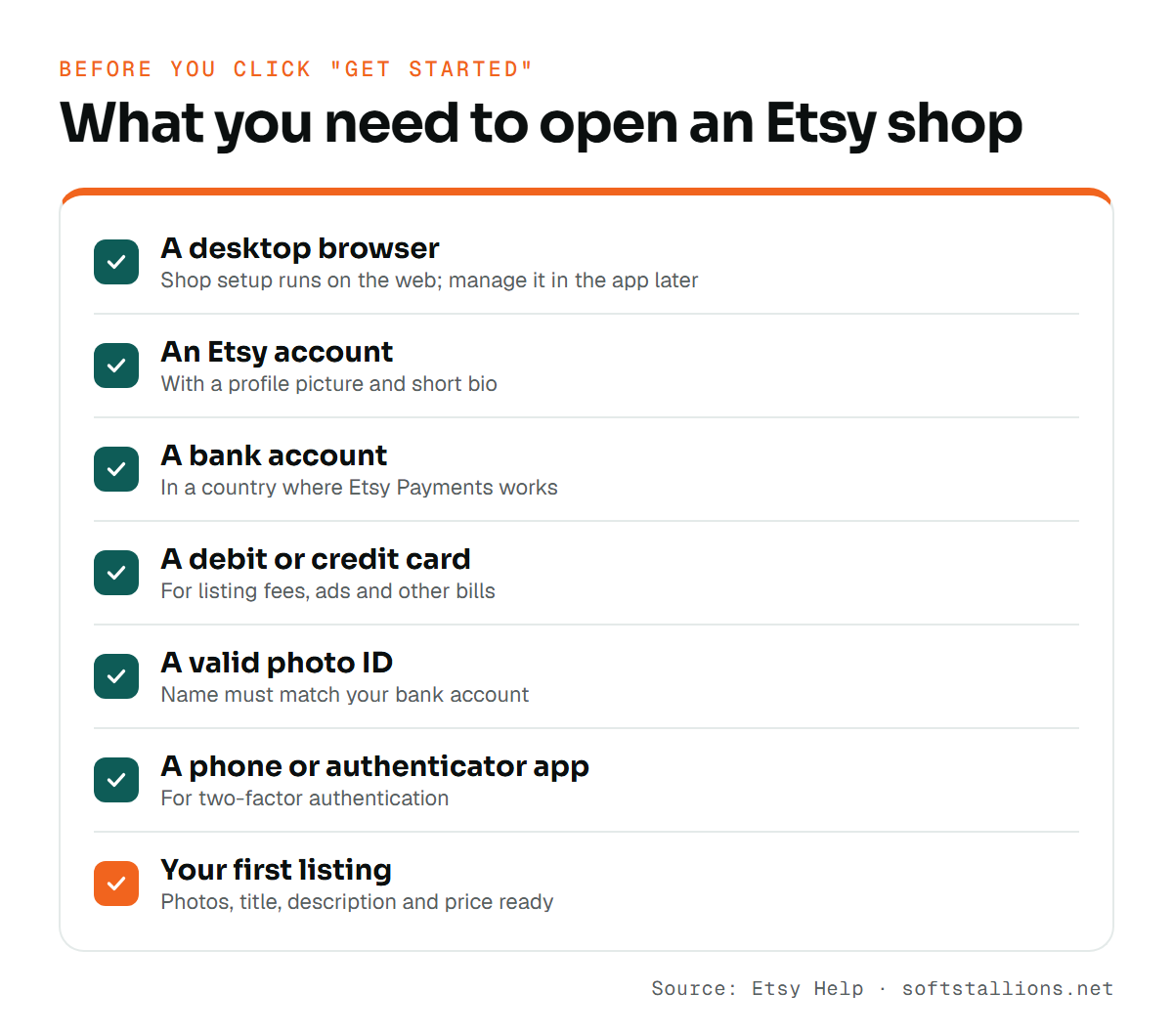
Have these ready before you click "Get started". That way you won't have to stop halfway through setup.
Here's the order we follow with clients. Steps 1 to 3 happen before you open the shop, and they matter most.
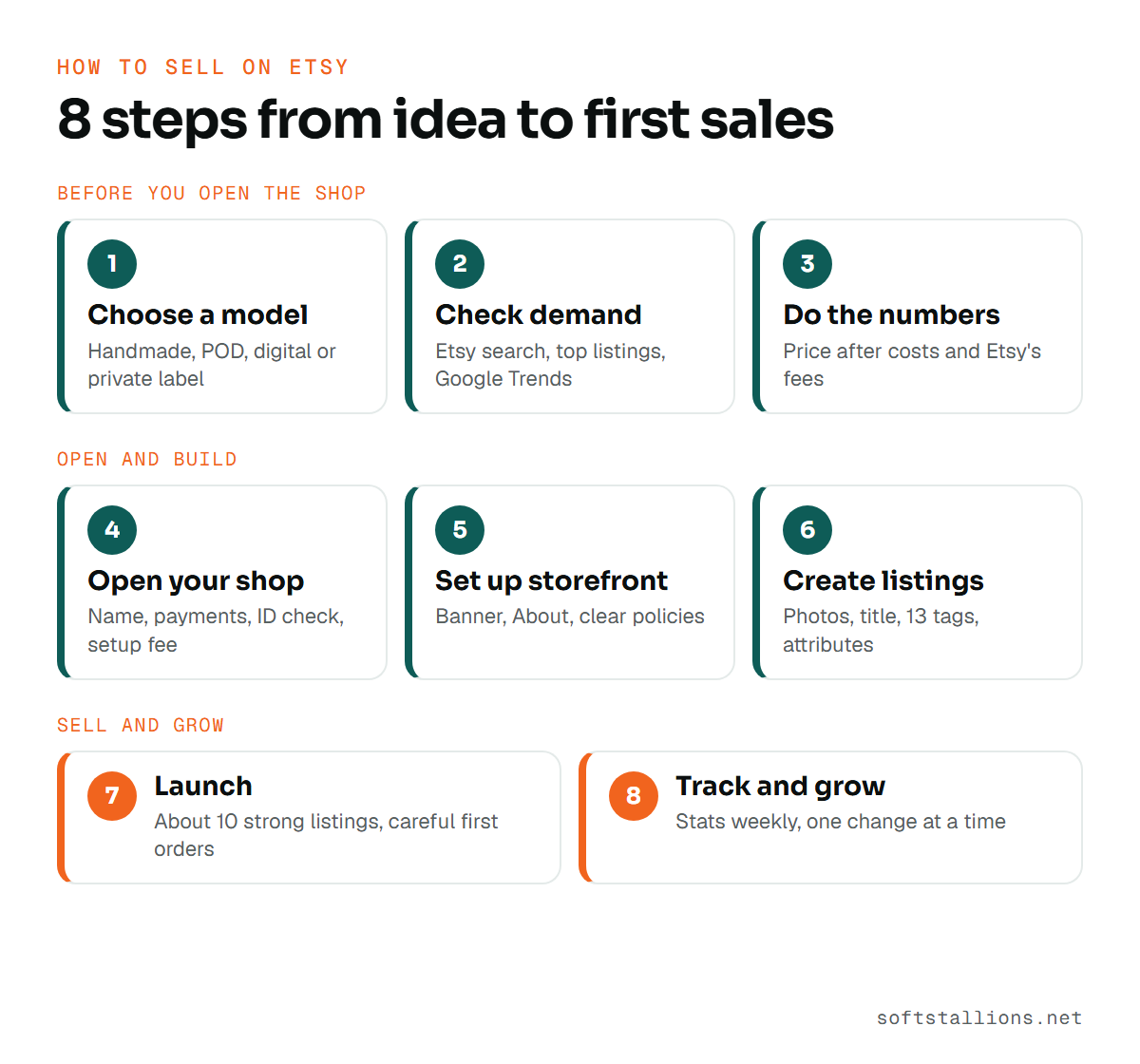
Decide how your products will be made: by you (handmade), by a print partner (print on demand), as downloadable files (digital products), or by a manufacturer to your own design (private label). This choice sets your startup cost, your margins and how your days will look. Our guide to Etsy business models compares all four.
A niche is a specific buyer plus a specific need. "Mugs" is a product. "Retirement gifts for nurses" is a niche. To check demand without paid tools:
Before you make anything, check that the price buyers accept leaves you a profit after product cost, shipping and Etsy's fees. A product that only works at a price nobody pays is a hobby, not a business. The fee table further down shows what Etsy charges.
Go to etsy.com/sell and select Get started. Etsy then walks you through:
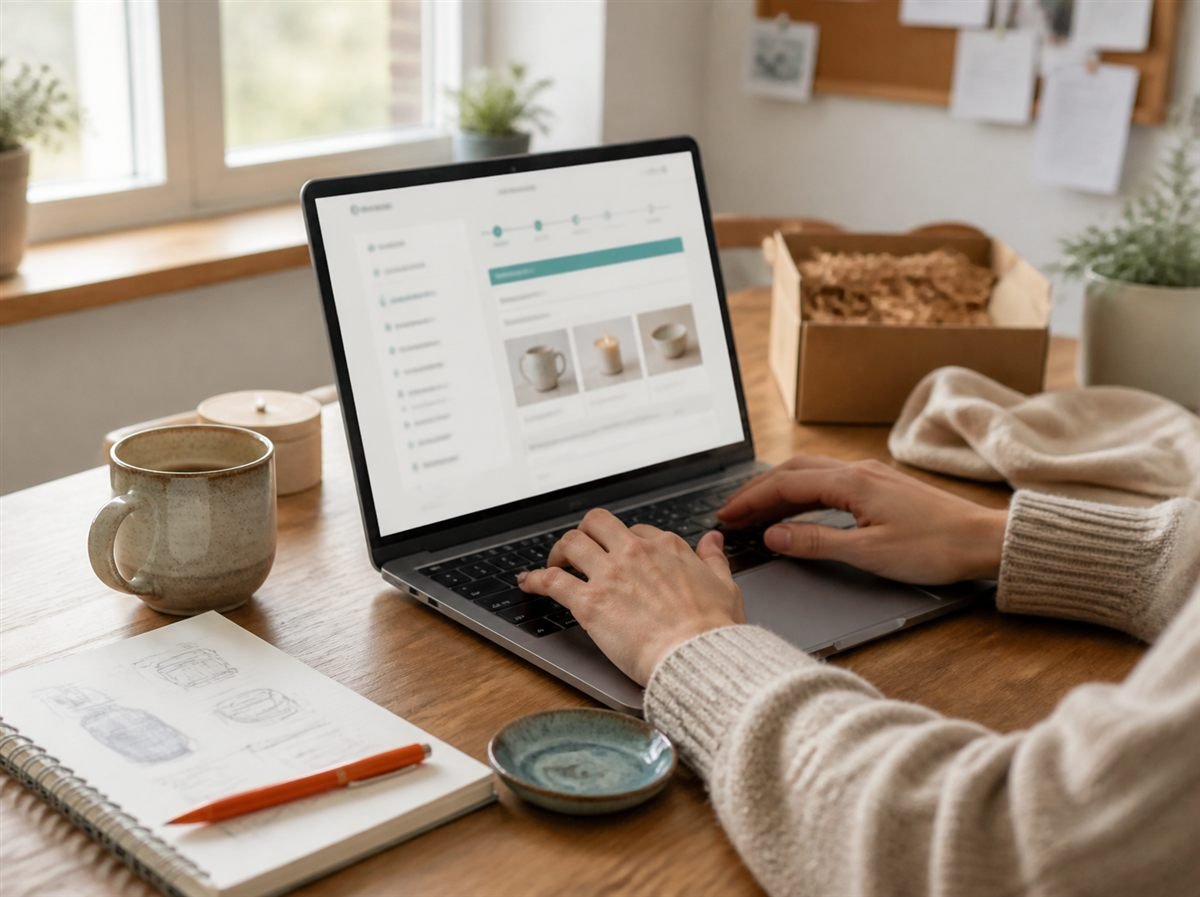
Buyers check your shop before they buy from someone new. Add a banner and shop icon that match your products, a short About section in your own words, and clear policies for processing time, shipping, returns and personalization. Set processing times you can keep in your busiest week, not your quietest.
A listing has two jobs: appear in search, and convince the buyer once they click. For both:
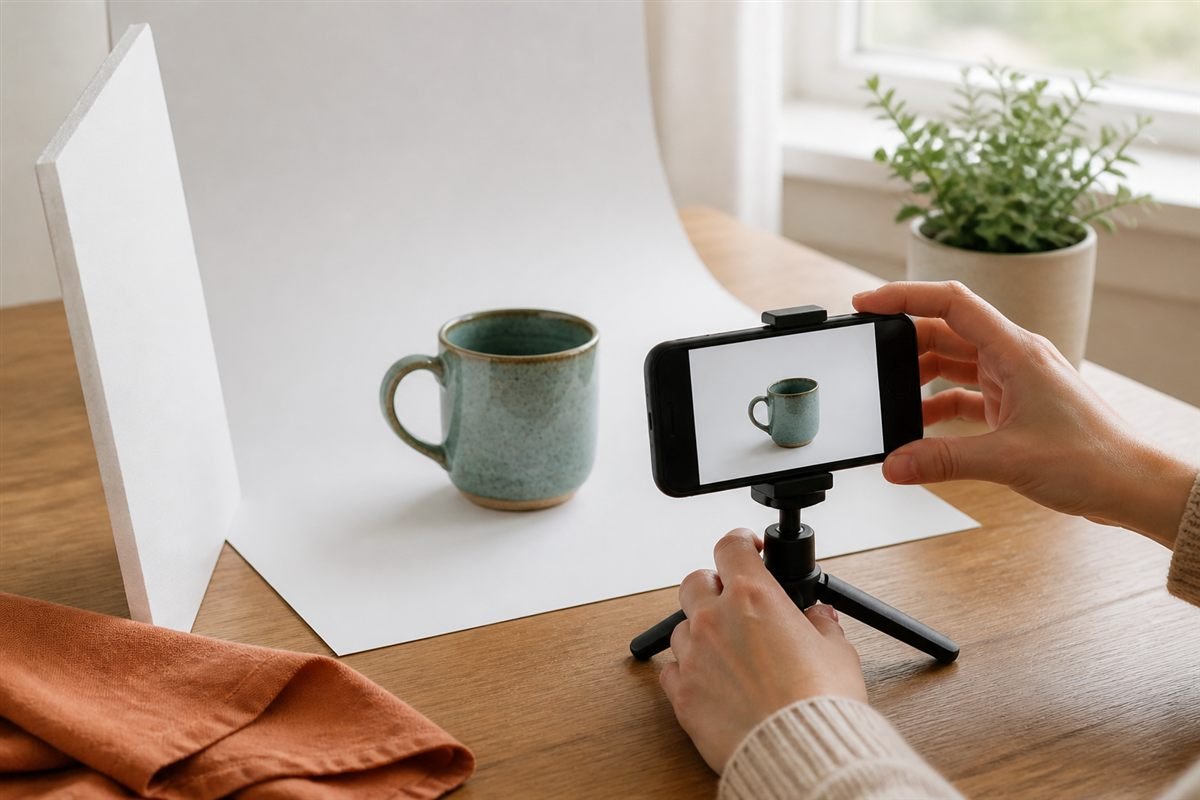
Start with enough listings for Etsy and buyers to judge your shop. Ten well-researched listings in one niche usually beat fifty rushed ones across five. Then:
Never buy reviews or ask friends to leave them. Etsy's policies prohibit manipulating reviews, and it can suspend shops that do. Earn reviews through good products, fast replies and on-time dispatch.
Your Shop Manager Stats show which searches bring visits and which listings get clicks but no sales. Check them every week:
Change one thing at a time on your best listings, so you can see what helped.
There's no monthly fee for a standard shop. You pay a one-time setup fee, then fees as you list and sell:
| Fee | Amount | When |
|---|---|---|
| Setup fee | One-time, varies by location | When you open the shop |
| Listing fee | $0.20 per listing | When you publish or renew; each listing lasts 4 months |
| Transaction fee | 6.5% of the order total, including shipping | Every sale |
| Payment processing | US: 3% + $0.25 per order. UK: 4% + £0.20. Pakistan: 6.5% + $0.30 | Every sale through Etsy Payments; rate depends on your bank's country |
| Offsite Ads | 15%, or 12% once you pass $10,000 in sales in 12 months, capped at $100 per order | Only on sales from Etsy's ads on other sites |
| Currency conversion | 2.5% | Only if your listing currency differs from your bank's |
Example for a US seller: a $30 order (a $25 item plus $5 shipping) costs $0.20 to list, $1.95 in transaction fees and $1.15 in processing. That's $3.30 in Etsy fees, before your own product and postage costs. Our Etsy shop setup and launch service includes pricing that covers these fees.
Yes, if your bank account is in a country where Etsy Payments is available. Etsy lists processing rates for dozens of countries, from the UK and Canada to Pakistan, India and the UAE. Three things change when you sell from outside the US:
Yes, in two ways Etsy allows. With print on demand, your original designs are printed and shipped by a production partner only after an order. With digital products, buyers download a file and nothing is shipped at all. In both cases the design must be your own work, and print partners must be disclosed in your listings.
There's no fixed timeline. Some shops sell in the first week, others take months. The biggest factors are in your hands: how specific your niche is, how many well-made listings you have, and how good your photos and titles are. Plan for 90 days of listing, checking Stats and improving before you judge the shop.
No. There is no monthly fee for a standard shop, but Etsy charges a one-time setup fee, $0.20 per listing, a 6.5% transaction fee and a payment processing fee on each sale.
Etsy doesn't require one. You still have to follow the laws that apply to small online businesses where you live, so check with a qualified professional if you're unsure.
Yes, Etsy Payments supports bank accounts in both. Payment processing is 6.5% + $0.30 per order for Pakistan and 5% + ₹25 for India, according to Etsy Help.
Etsy asks you to set up your shop in a desktop web browser. After that, you can manage orders and listings from the Etsy Seller app.
Enough to show a clear range in one niche. We usually suggest around ten well-researched listings, then adding more based on what your Stats show.
Free consultation · USA & worldwide
Skip the months of trial and error. We research your product, set up your shop and write your first listings, so you open with a plan instead of a guess.
Or see the services new sellers start with: Shop Setup & Launch · Product Research · Keyword Research · Listing Optimization
Our Etsy shop setup guide walks you through every screen: preferences, shop name, payments, setup fee, ID check, 2FA, storefront and first listings.
Compare the four Etsy business models: print on demand, digital products, private label and handmade. What Etsy allows, startup costs and how to choose yours.